An absconding report is not just an employer dispute. It can stop a worker from changing jobs, leaving the country, or keeping their residency until the case is settled.
Under Qatar’s Law No. 21 of 2015, an employer or recruiter may report a worker who leaves work without following legal procedures. If the report is not withdrawn or resolved, the worker can face travel restrictions, loss of access to government services, residency cancellation, fines, and even deportation.
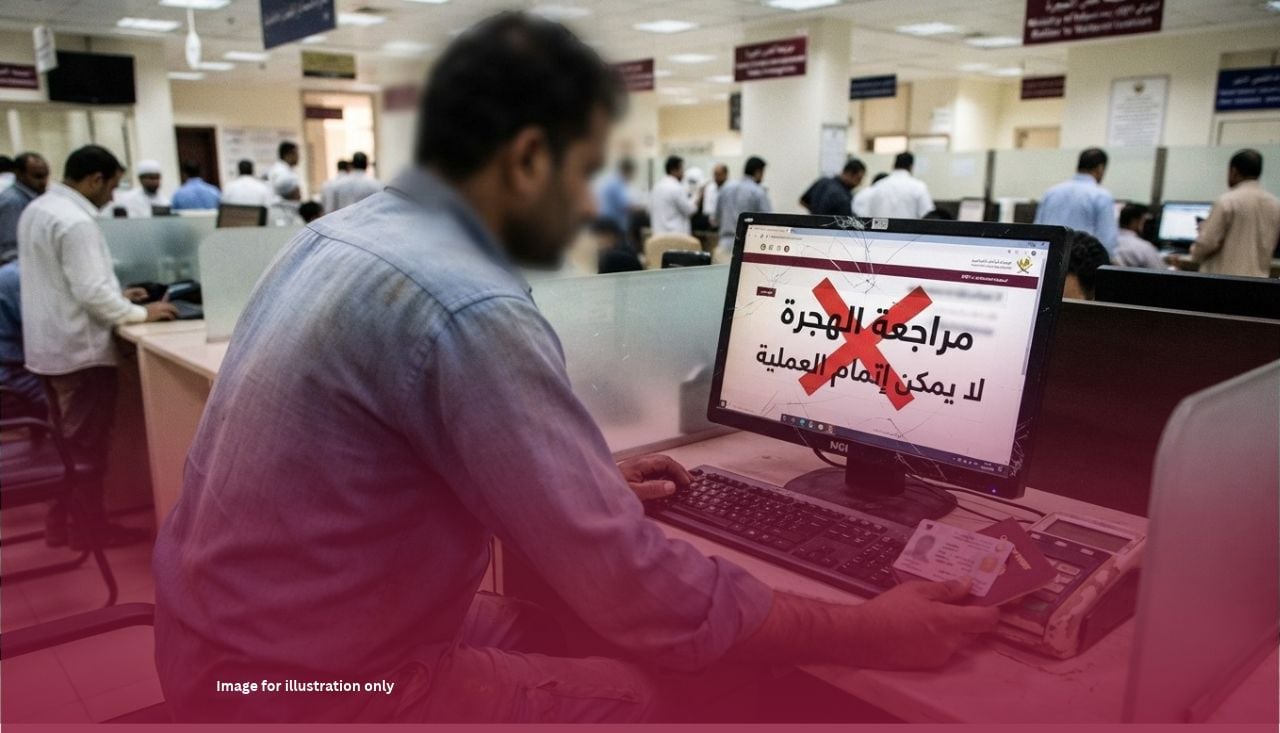
The law does not use the term “absconding.” It instead says an expatriate must not leave work with a recruiter or work for an unauthorised employer, as published on Qatar’s official legal portal, Al Meezan.
- Article 16 prohibits a worker from leaving their recruiter’s employment or working for another employer without authorisation.
- Article 19 requires the recruiter to inform the authorities within 14 days after a worker leaves work.
- Article 44 allows the Minister to cancel a foreign national’s residence permit and order deportation if a settlement is unpaid, or after a prison sentence or unpaid fine.
- Article 26 says a worker deported or expelled by court order may return only with a Ministerial decision.
The Ministry of Interior’s Search and Follow-Up Department handles cases involving absconded workers. It also warns employers against hiring or sheltering workers with active absconding cases.
What Happens to Your Residency
An unresolved report can affect nearly every part of a worker’s life.
- The worker may be placed on a ban list and lose access to Ministry services.
- Travel and employer-change requests can be blocked.
- The worker may be barred from leaving Qatar if a settlement, fine, or court order remains unpaid.
- Deportation costs usually fall on the recruiter or unlawful employer if proven. The worker may be liable if the unlawful employer cannot be identified.
Leaving a job does not automatically mean a permanent re-entry ban. But the situation becomes serious if it leads to a court order, unpaid penalty, or cancelled residency.
How to Check for a Report
Workers should not rely on hearsay. The first step is to check official records.
- Check QID and residency status through the Ministry of Interior’s Metrash services.
- Check the status of a job-change application through the Ministry of Labour’s electronic notification system.
- Contact the Ministry of Labour if the employer cancels the QID or the worker suspects a report has been filed.
- Contact the Ministry of Interior’s Search and Follow-Up Department for immigration-related cases.
How to Contest a False Report
A worker who believes the report is false should act immediately. Waiting can make the case harder to reverse.
- Gather attendance records, payslips, work messages, leave approvals, and witness details.
- Ask the employer or recruiter to withdraw the report if it was filed in error or as retaliation.
- Submit a complaint through the Ministry of Labour’s Unified Platform for Complaints and Whistleblowers.
- Raise the case with the Ministry of Interior if residency, detention, or travel restrictions are involved.
- Get legal advice if there is a summons, deportation order, unpaid wages, or criminal case.
Retaliation Is a Known Risk
Qatar has moved to limit the misuse of absconding reports. The Ministry of Labour and Ministry of Interior linked their systems so employers cannot file an absconding case after a worker submits a job-change application or has an active labour complaint.
Employers must also provide more information when filing a report, including salary details, outstanding dues, whether a labour complaint exists, the worker’s accommodation, and witness information.
Workers should treat an absconding report as urgent. The sooner the facts are documented and raised through official channels, the better the chance of protecting residency, employment rights, and the ability to stay in Qatar.